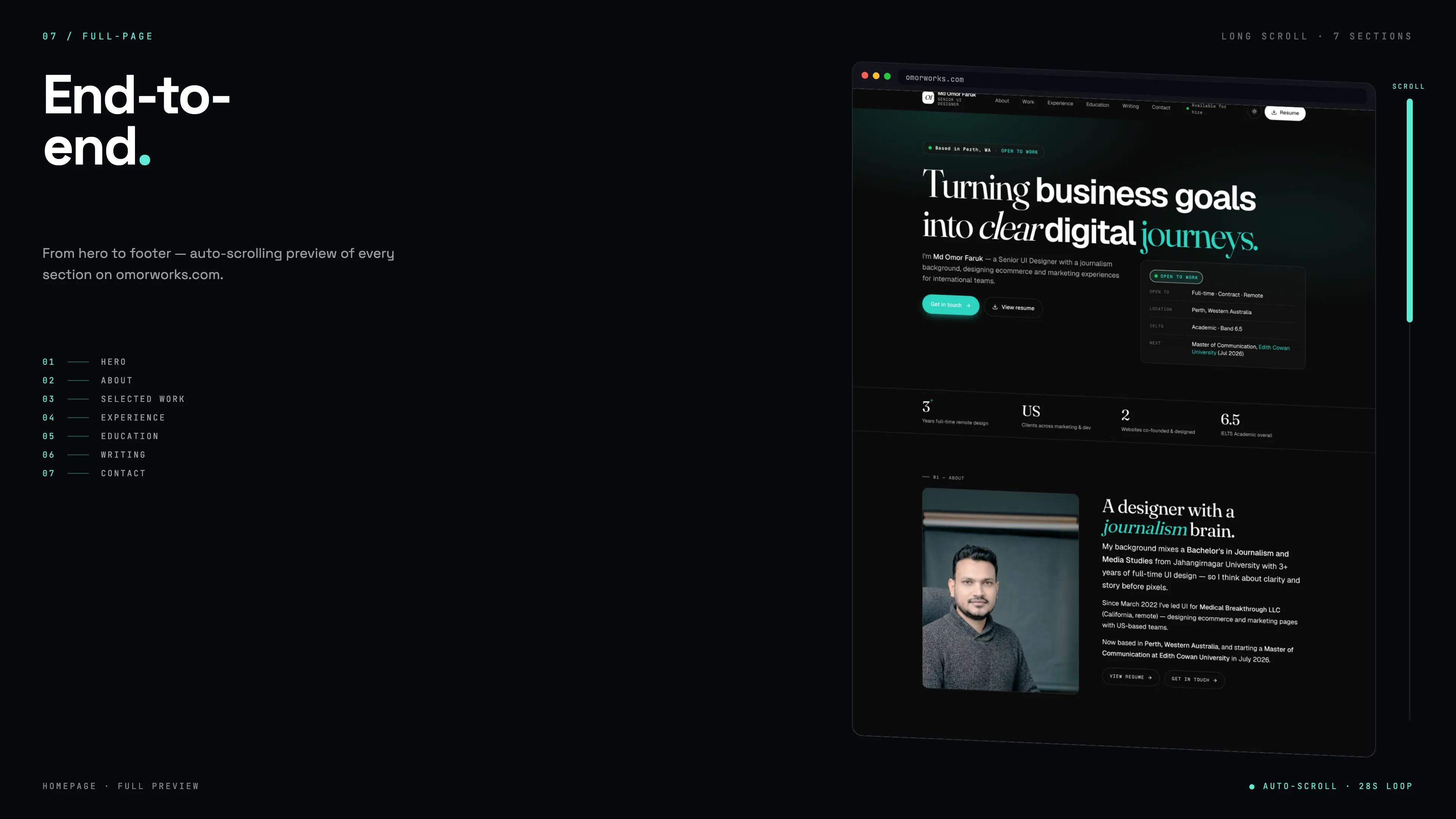
omorworks.com
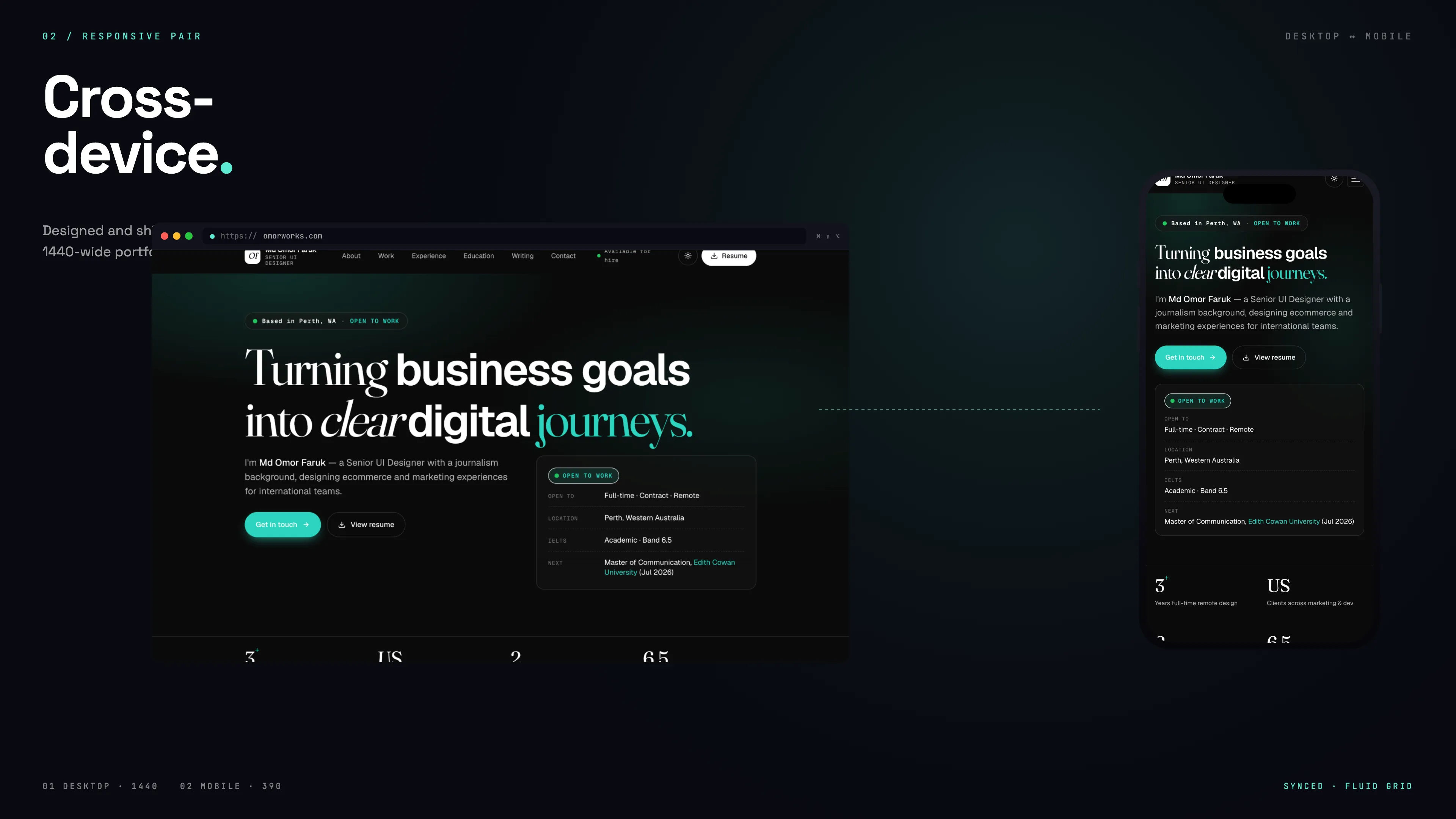
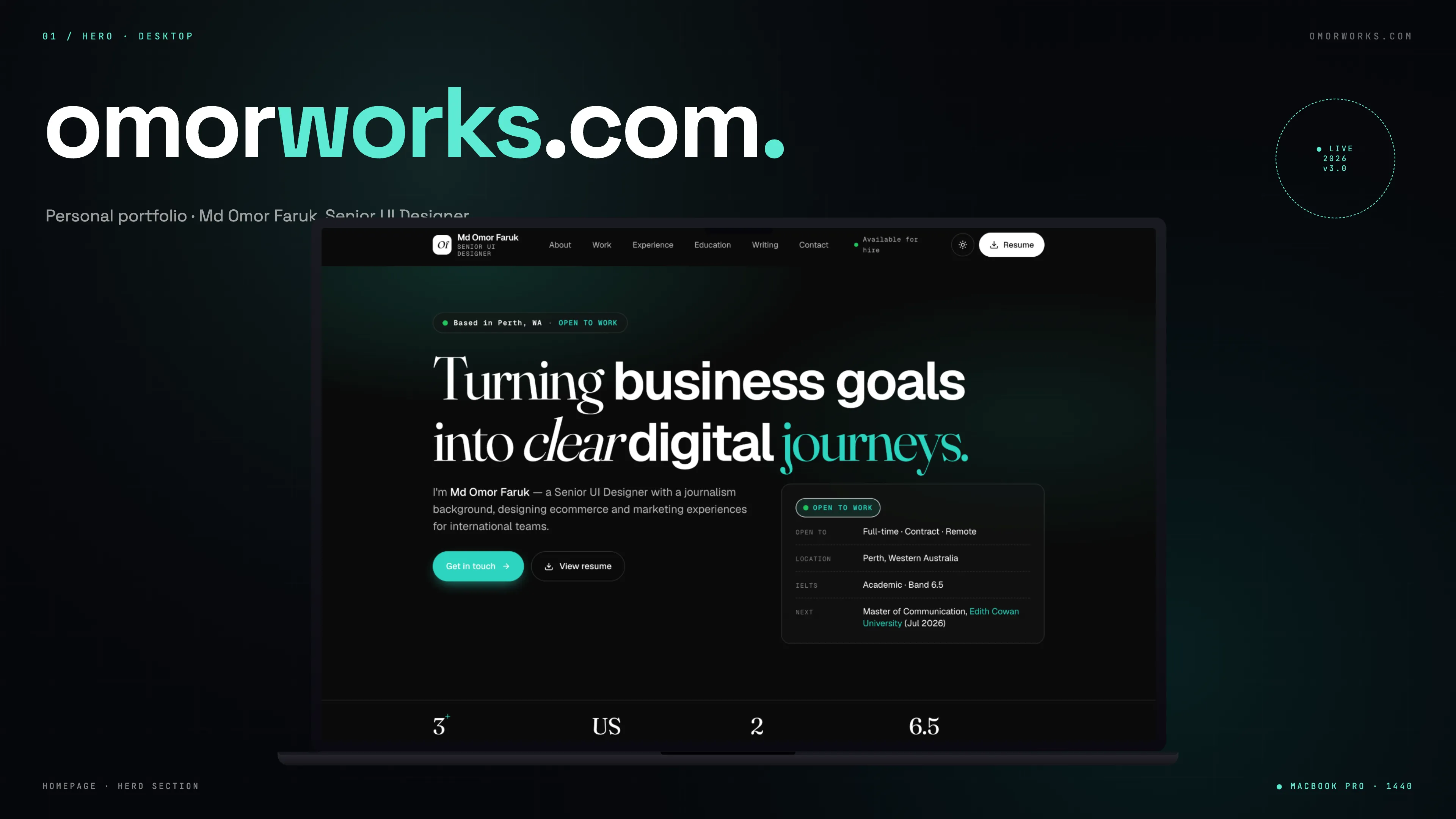
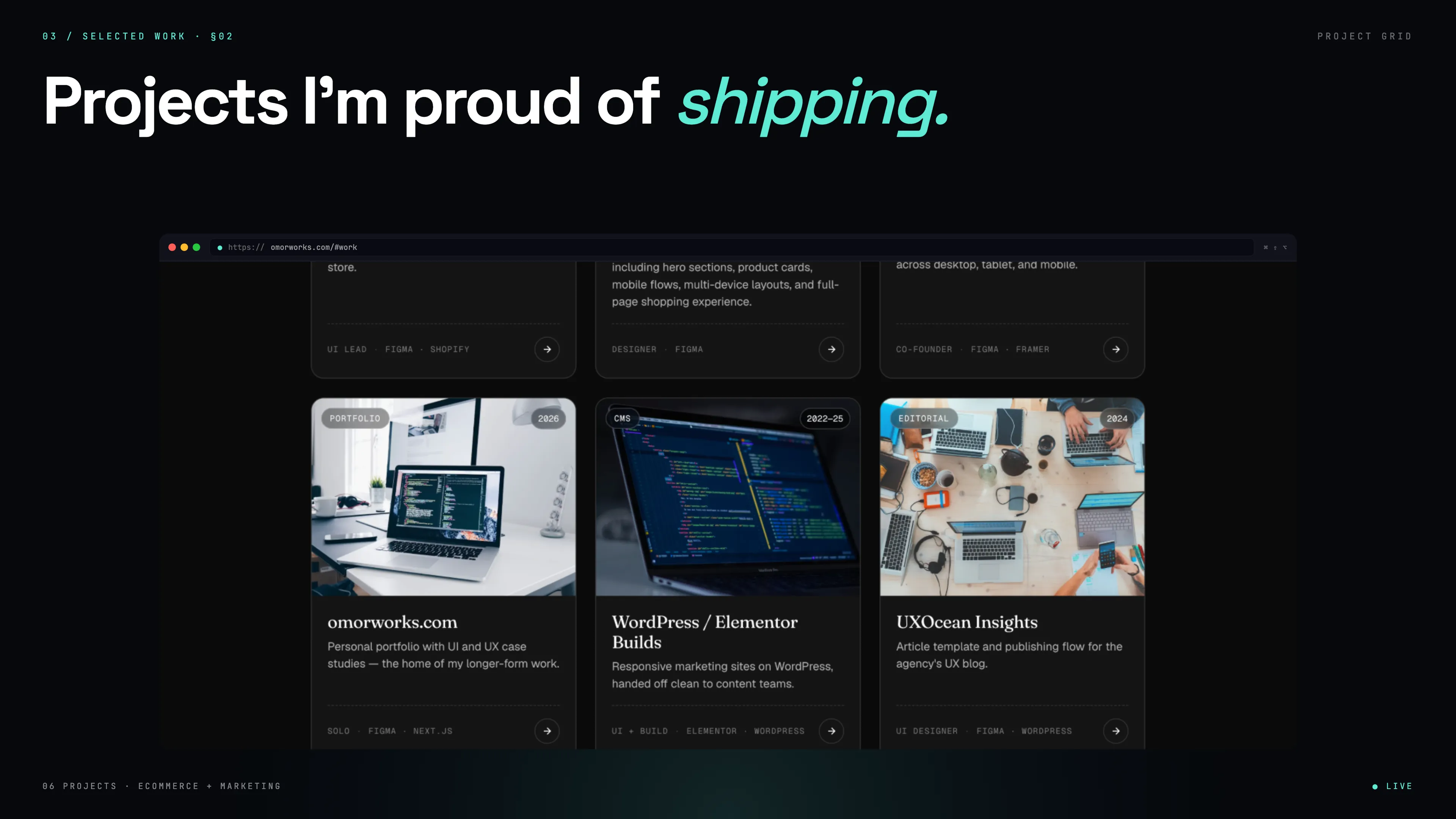
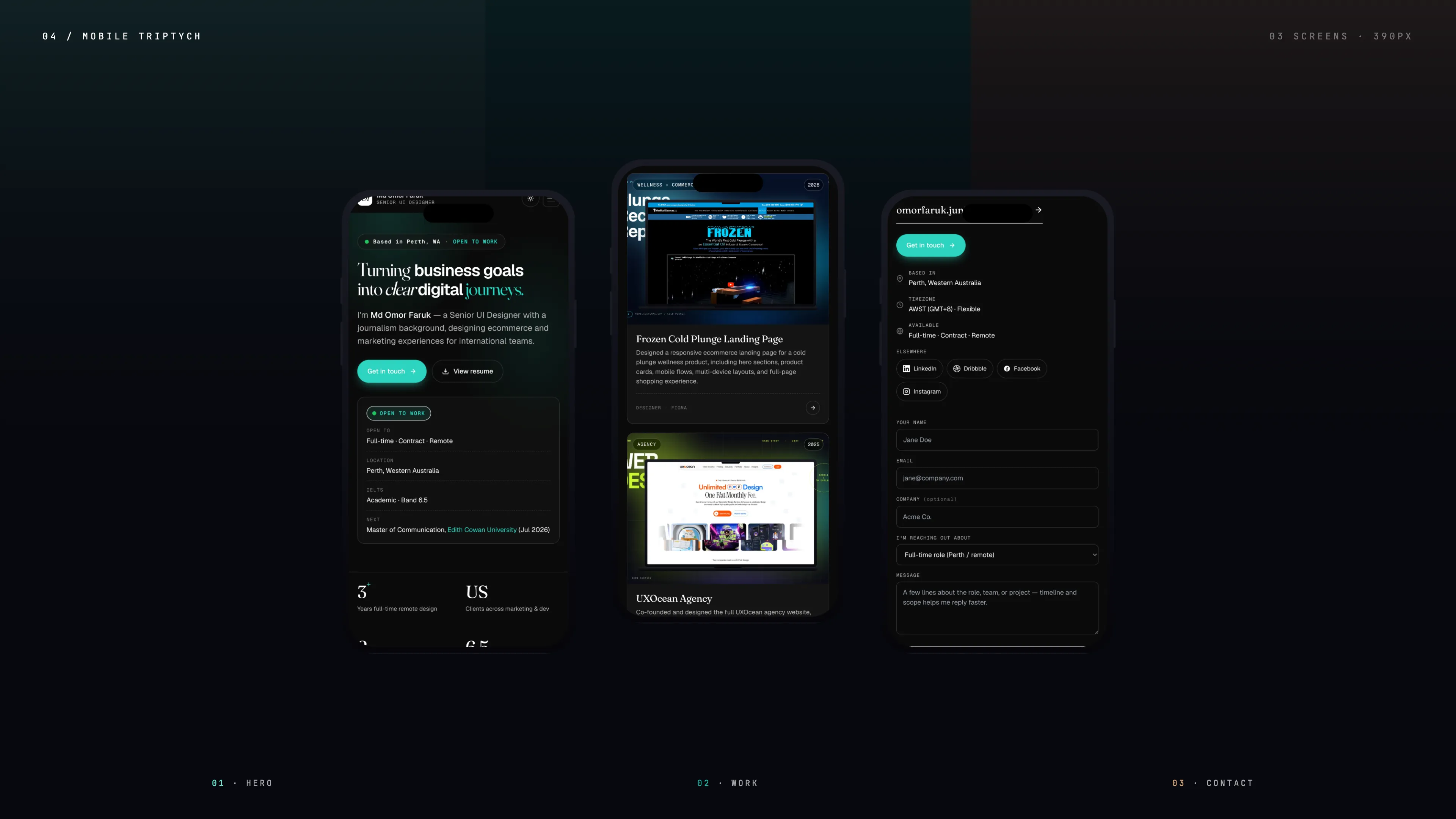
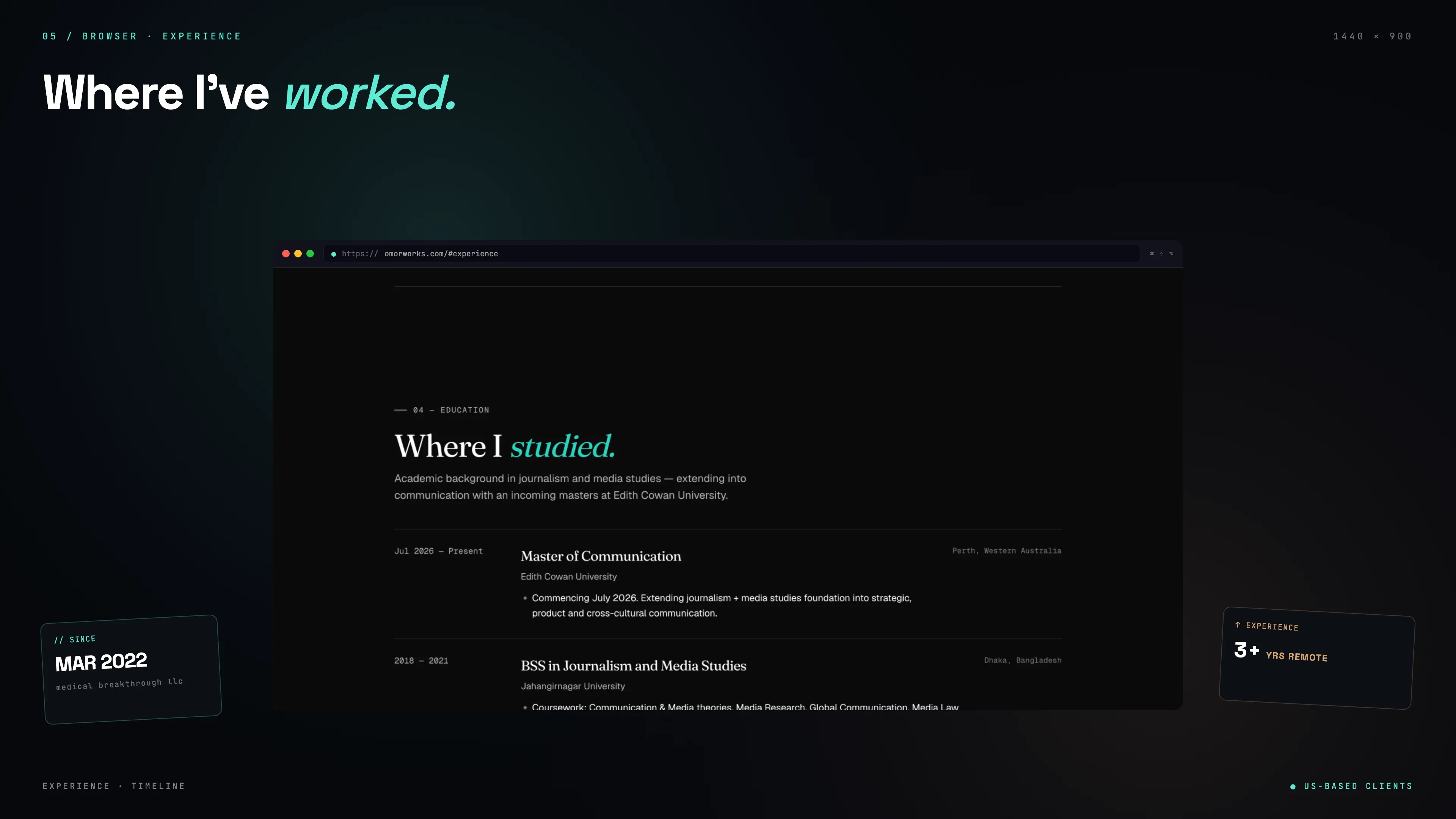
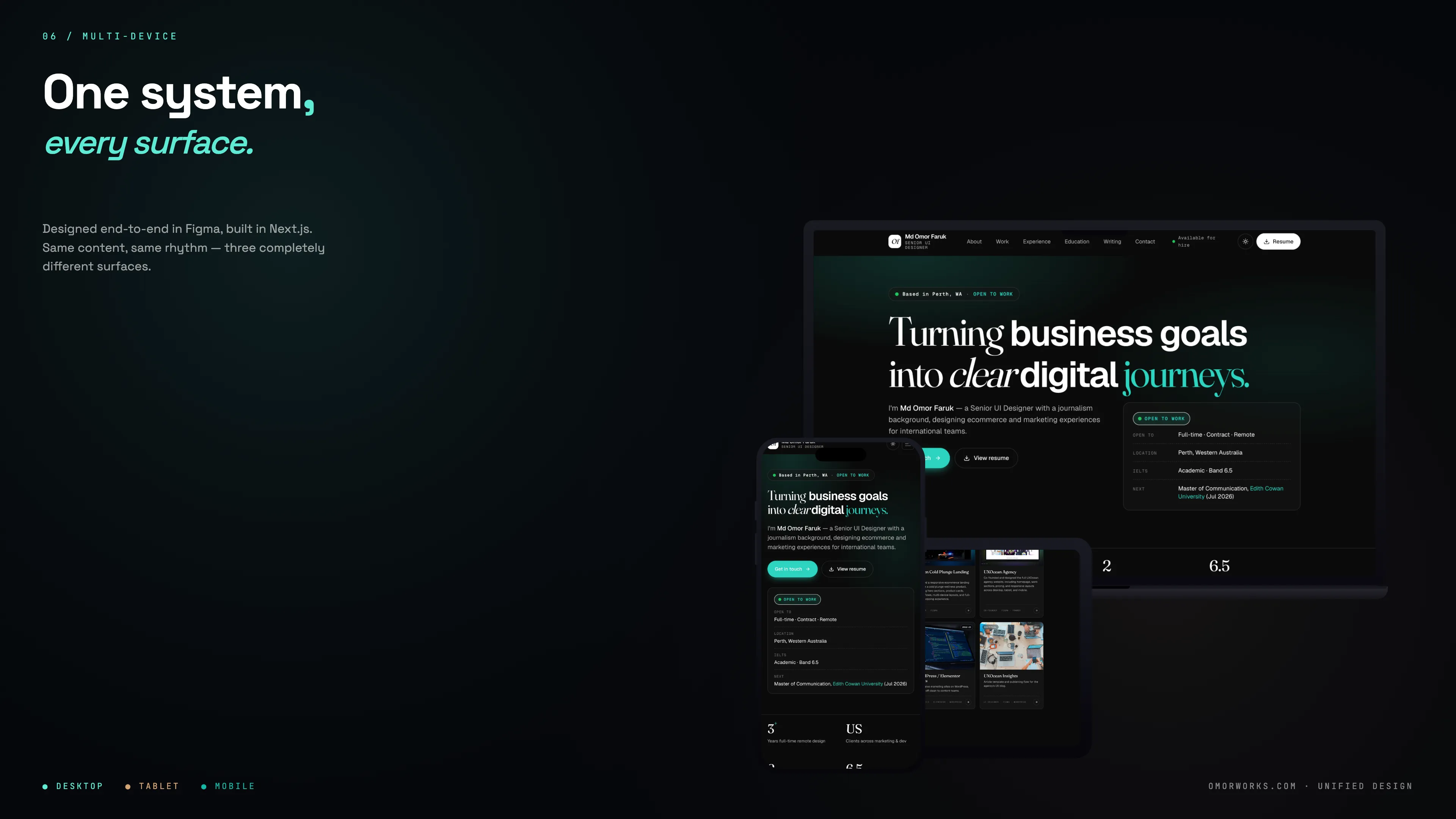
The portfolio you’re reading. Designed and built solo — brand, writing, work cards, resume, blog, contact — with an emphasis on editorial clarity and a slow, confident scroll.
- Year
- 2026
- Role
- Solo (design & build)
- Tools
- Figma · Next.js · TypeScript · Tailwind
- Link
- omorworks.com
Overview
This site is my own portfolio — the home of my case studies, writing, resume and contact form. Solo design and build, iterated in public over several versions.
The goal was editorial clarity rather than agency maximalism. Calm typography, generous whitespace, a single warm accent, and case studies that actually read like case studies instead of screenshot carousels.
The challenge
Portfolios are a strange product. They have to impress designers (who can smell a template) *and* be scannable by non-designers (hiring managers, founders, recruiters) in under 30 seconds. Too indie and recruiters bounce; too corporate and designers yawn.
I also wanted to prove I can write, not just design — which meant the blog had to be first-class, not an afterthought, and the case studies had to hold up as writing.
Approach
Editorial type system: Fraunces for display, Geist for body and mono. Warm terracotta accent used sparingly, only for emphasis and interactive states.
Project pages designed first as long reads (Overview → Challenge → Approach → Outcome → Learnings), then the home grid was built around them. Content-first, not layout-first.
A shared contact footer so every page ends with a way to reach me — not just the homepage.
- Custom OG images per route (Satori-rendered with brand chrome).
- Light + dark mode with a single click, preference stored locally.
- <Figure /> component for inline images inside MDX blog posts.
- Print-friendly resume at /resume — one click to PDF.
Outcome
Shipped v3 with 20+ projects, 20+ writing slots, a print-friendly resume, a custom 404, and a site-wide contact footer — all driven from one typed data layer.
Content can be updated without touching layout code. Images, copy and metadata each sit in their own lane, and the DOCS.md file covers every common edit.
Learnings
A portfolio is a product you redesign often. Invest in the data layer (`lib/projects.ts`, `lib/blog.ts`) first — every visual change is cheaper afterward when the content is clean.
Writing the case study early forces you to take the work seriously, which improves the work itself. The blank page is a great editor.